
The Healing Power of One Strange Hum
Ever seen one of those videos where the whole class is humming, shaking and making strange guttural noises to release stress?
One came across my Instagram feed not long ago, and I thought, “I like my self-hack techniques, but that’s a bit much“. Whilst I mentally filed it under the same category as anal sunning and other bizarre-but-viral wellness trends.
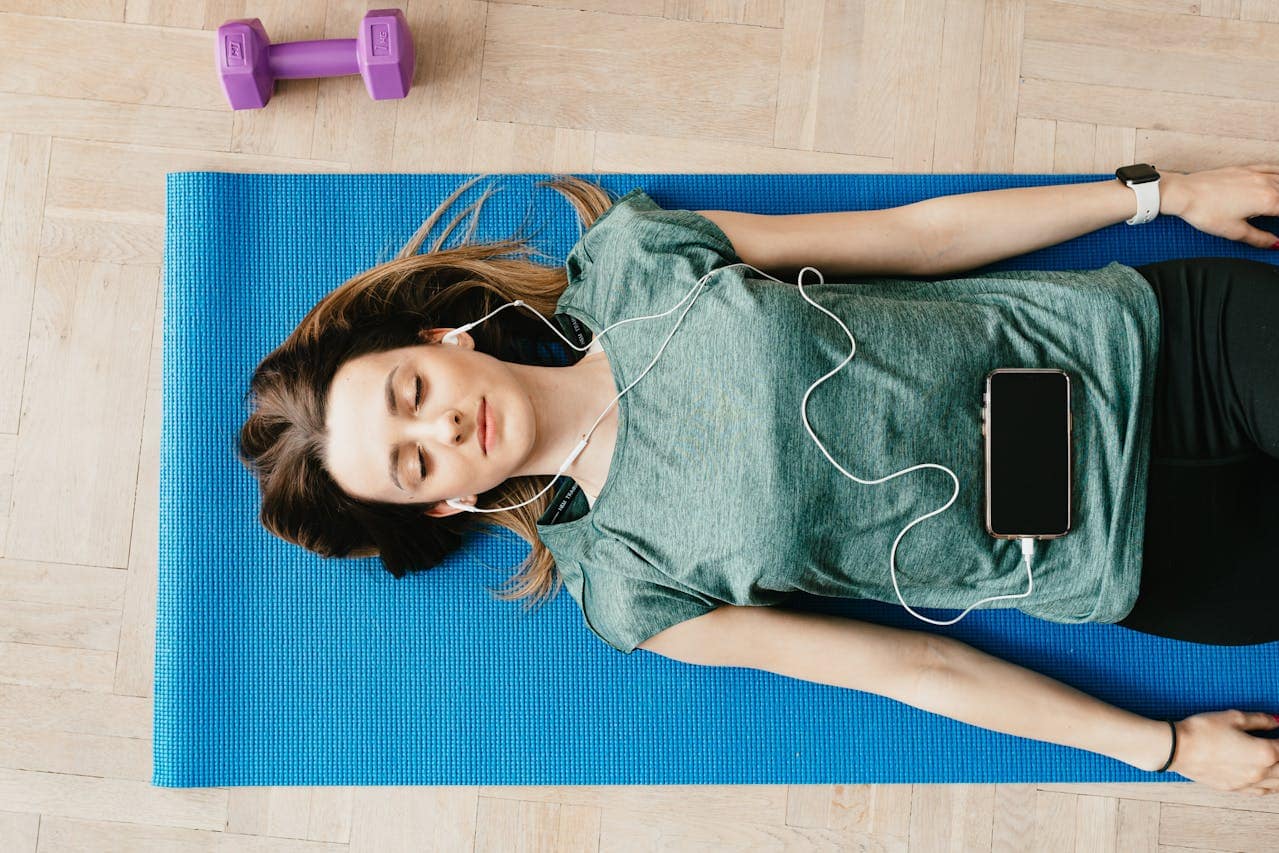
But then this one time—after days of headaches, nausea, and fatigue—I finally forced myself to do at least a 20-minute yoga session on Gaia. And at the end, after shavasana (corpse pose), I found myself making these involuntary “mmm” noises.
That shallow humming worked like a release valve for all the tension in my body and mind. Which then quickly deepened into a short, low hum, and then into a longer, full-body hum that felt like the cherry on top.
My nausea and headache were suddenly gone.
Those crazy somatic humming & shaking videos suddenly didn’t seem as crazy anymore.
I started thinking—well, this actually makes sense, and for two different reasons…
1. Animal Instincts and Somatic Release
First of all, we know animals naturally perform somatic release by literally shaking off energy after a fight-or-flight experience. This is often referred to as a neurogenic tremor. And if you’ve ever owned a cat or a dog, you’ve most likely observed this. Even my Syrian dwarf hamster used to release tension through neurogenic tremors.

After disappearing for two weeks, my dwarf hamster developed a habit of shaking (vibrating, really) every time she was back in my hands. Followed by grooming my hand and chattering her little teeth to say hello.
I used to wonder if the shaking us humans experience while crying is akin to the somatic discharge animals exhibit after fight or flight scenarios. And that, potentially, humans lost this ability to offload “bad energy”, which is further supressed by not allowing ourselves to dance, cry, shake, or hum, off the cuff.
2. Vibrations, Mantras, and Chakras
The Sacred Sound OM
Secondly, vibrational sounds, especially self-generated ones like humming or chanting OM (best pronounced AUM for maximal benefits), have been shown to calm the nervous system. Studies reveal such vocal vibrations help regulate the vagus nerve, lower cortisol, and even boost the immune system.(1,2,3)
I’ve been dabbling in meditation techniques involving the “sacred universal sound” OM for years as part of my self-development journey. Mainly to regulate my mood and focus. But I didn’t stop there.
I started repeating ancient chants like the Sanskrit healing mantra Om Tryambakam. Trying my best to get the pronunciation right, partly so I wouldn’t accidentally summon a demon or order a plate of potatoes. Now, I don’t think it healed anything in me, so I doubt it’s a secret universal healing spell, but I did feel much better on days I’d spend 10-15 mins chanting it.
But honestly—if a mantra has been used for thousands of years as a sound intended towards a specific use (e.g.: chant to break addictions) or body area (e.g.: Da for stomach), isn’t it likely that the vibration itself, at the very least, resonates with that function?
Ready to Harness Sound & Breath for Healing?
Check out Breathwork for Unmatched Vitality and Clarity. A powerful Mindvalley course that combines rhythmic breathing and ancient mantras like OM to help regulate your nervous system from within.
The Universal Healing Mantra
My most intriguing experience though with sound came from the Ra-Ma-Da-Sa-Say-So-Hung chant. Also called the Universal Healing Mantra. From the first time ever chanting it, I could feel how each syllable vibrates a different energy centre (chakra) alongst my spine, starting at the base:
- Ra – vibrates the root chakra (tailbone)
- Ma – vibrates the sacral chakra (lower belly)
- Da – vibrates the solar plexus (stomach)
- Sa – vibrates the heart chakra (chest)
- Say – vibrates the throat chakra
- So – vibrates the third eye chakra (OM also does)
- Hung – vibrates the crown chakra
After learning this, I would effectively use it to soothe areas in my body. For instance, repeating Da for a bad stomach, or Hung during a headache.
This got me wondering:
- What if certain words or sounds resonate with very specific parts of the body?
- What if language itself has vibrational origins rooted in our biology?
- Like how Ma for “Mother” might vibrate where the uterus is?
Total speculation, but a fun rabbit hole.
While practicing this whole-body chakra chant, I also noticed something strange: some parts of my body were easy to vibrate; others, not at all.
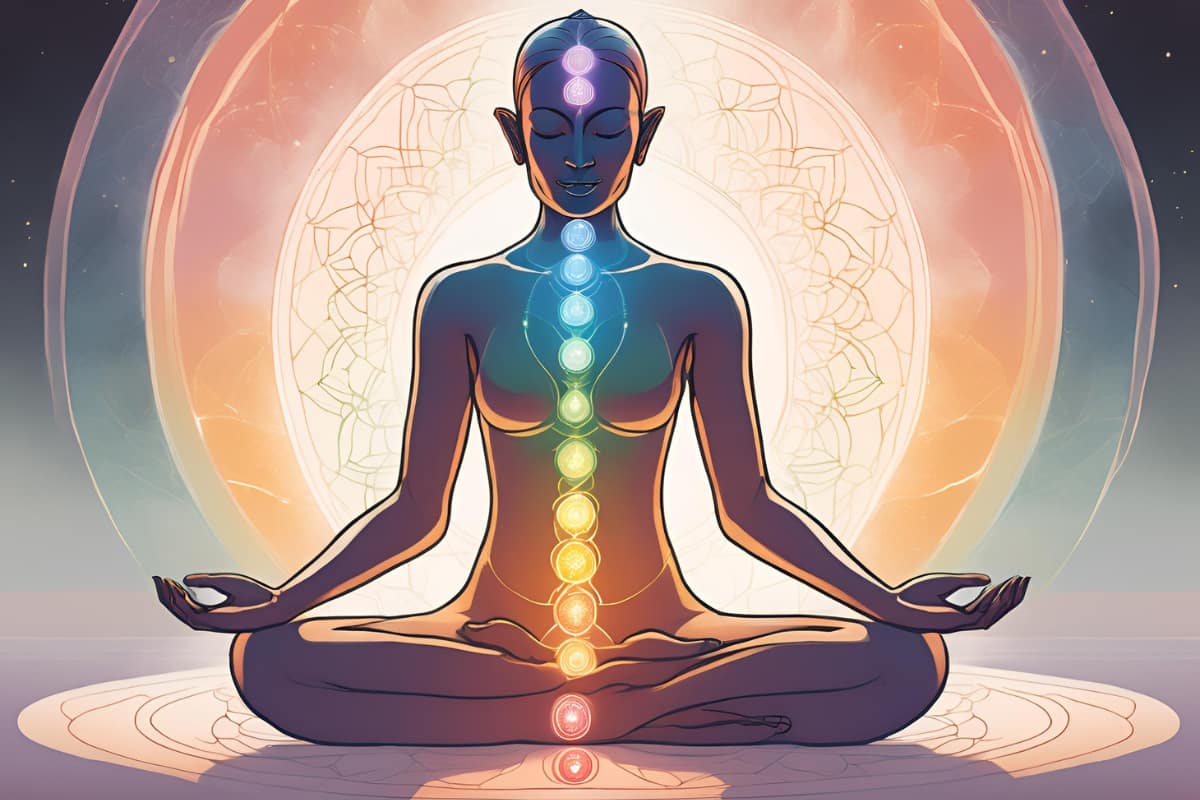
And surprise, surprise—the areas hardest to vibrate are the exact parts of my body I feel most disconnected from, and where I’ve had the most health issues.
So lately, I’ve been practicing sounds that target those tricky spots. And I think I might be onto something.
In the meantime, try it for yourself. Experiment with some mantras or even just those satisfying “mmm” sounds. And let me know in the comments if you also start vibrating like a happy hamster.
Want to Unlock Your Body’s Healing Frequencies?
Explore the Chakra Healing course on Mindvalley; a deep dive into the emotional, psychological, and energetic roots of each chakra, helping you integrate them.
Disclosure
Mindvalley links in this post are affiliate links, meaning I earn a small commission if you make a purchase—at no extra cost to you. I only recommend courses I personally rate or think you’ll love!